Field guide 04 / Documentation and aftercare
Carry the restoration history forward
A restoration is easier to understand when its decisions travel with the watch. The record should explain both the work completed and the evidence deliberately preserved.
Build a file someone else can read
A paid invoice proves that a transaction occurred. It may not explain what happened to the watch. A useful restoration file adds a condition report, agreed scope, relevant correspondence, photographs, component decisions and completion notes. Keep these materials together rather than scattering them across messages that may later become inaccessible.
Begin with a concise identity sheet: brand as marked, case reference, movement identification where known, visible inscriptions and the basis for any attribution. Record uncertainty honestly. A number transcribed from an invoice should not silently become a number confirmed on the object. Keep full identifiers privately, and redact them from photographs intended for public discussion.
Choose ordinary, readable formats. Original photographs, PDF documents and a plain-text summary are easier to pass on than a record dependent on a single application. Maintain another copy in a separate location. A folder that disappears with a failed phone does little to protect the next chapter of the watch's history.
Record interventions and non-interventions
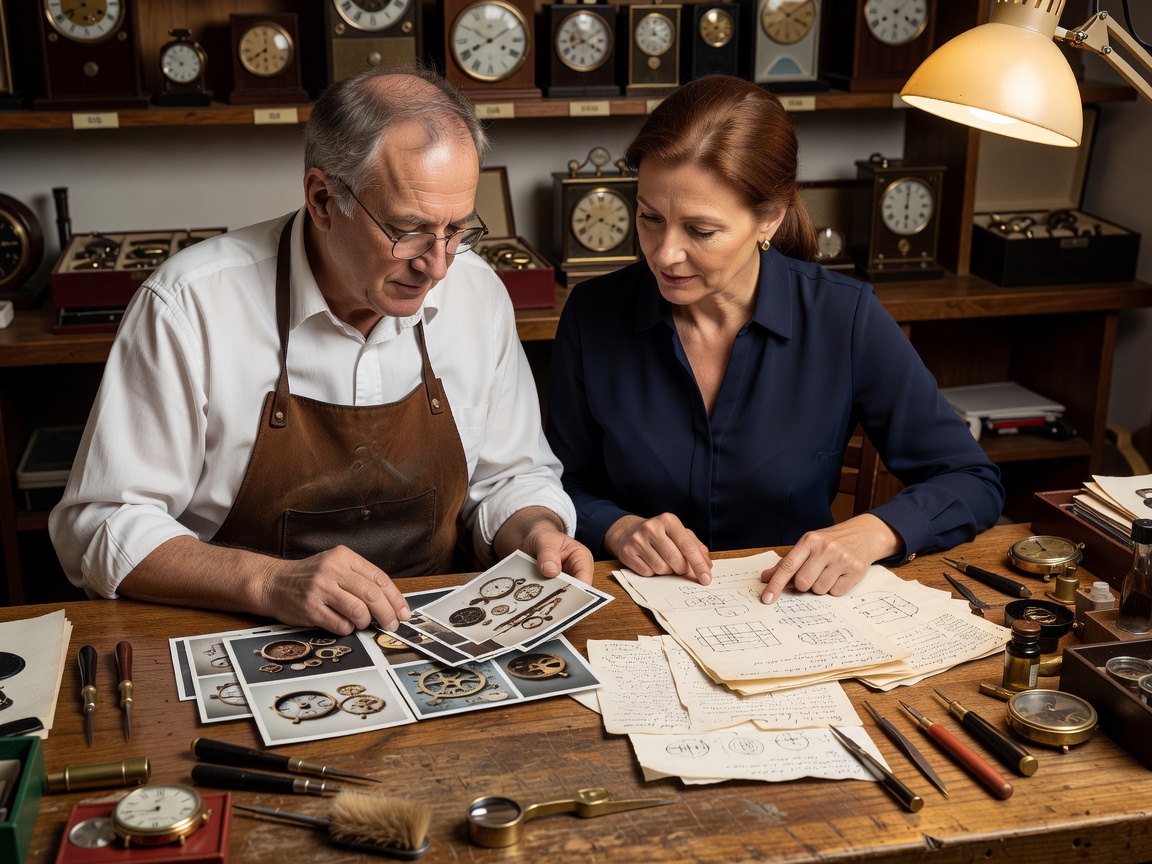
Describe significant replacements precisely. A generic entry such as “parts fitted” is less helpful than identifying the component, its source category and any adaptation. Ask the practitioner to distinguish a modern service replacement, compatible component, older unused stock and newly manufactured part where relevant. Avoid attaching stronger claims than the available evidence supports.
Retain before-and-after photographs taken from comparable angles. They need not be glamorous. Their purpose is to show case profiles, dial condition, hand appearance and other meaningful details. Record work that was considered but declined, including polishing, dial refinishing or replacement of a stable component. A deliberate decision not to intervene is part of the object's history too.
Where removed components can legally and safely be returned, label them and keep them separately from the working watch. Note their relationship to the intervention rather than assuming a future reader will recognise them. Exchange policies, contamination concerns or disposal requirements may prevent return; record that explanation instead of leaving a mysterious gap.
Keep test conditions with the results
A rate figure without its context invites false comparisons. Retain the positions tested, state of wind, duration and any limitations supplied by the practitioner. If power reserve or complications were checked, record what that involved. Water-resistance information should state the test performed and date, not merely repeat the original case marking.
A workshop result does not become a permanent guarantee. Seals age, impacts occur and use conditions change. A watch that once passed a test should not automatically be treated as suitable for water exposure years later. Follow the specific guidance provided for the actual watch rather than extrapolating from the reputation of its model family.
Turn advice into everyday habits
Ask for winding and setting instructions appropriate to the movement. Some calendars have restricted periods for correction; the relevant guidance depends on the mechanism. Do not adopt a universal time window from an unrelated watch. If resistance changes or a control feels wrong, stop rather than forcing it.
Store the watch in a dry, stable environment away from strong magnetic sources, unnecessary heat and direct sunlight. Avoid keeping it in a damp pouch or beside a source of vibration. A watch winder is not automatically necessary, and continuous running is not a substitute for maintenance. Discuss storage based on intended use and the movement's condition.
Report a sudden rate change, new noise, condensation or altered winding feel promptly. Suspected moisture calls for urgent professional attention; household heat and improvised drying can worsen the situation. Avoid continuing to wind or run a visibly compromised watch while waiting for an assessment.
Let intervals follow evidence
There is no single service interval that suits every mechanical watch. Construction, lubricant history, wear, storage and use all matter. Keep the practitioner's recommendation and any manufacturer guidance with the file, noting when that advice was given. A change in behaviour can justify attention before a calendar reminder, while a historic non-running object may have a conservation plan rather than a routine service schedule.
Current care information from Omega, Rolex, Jaeger-LeCoultre and Grand Seiko illustrates why operating instructions and maintenance advice are model-dependent. These manufacturers are references, not affiliates, and current guidance should not be assumed to fit a vintage example. For a broader framework for preserving records, see the The National Archives guidance on looking after personal archives.
Glossary: service history versus provenance
Service history documents maintenance and interventions. Provenance concerns an object's chain of ownership and historical associations. They can support one another, but neither automatically proves all claims about originality or authenticity.