Field guide 03 / Cases, dials and hands
Decide what not to refinish
A surface can carry both damage and evidence. The difficult part is deciding which changes protect the watch, and which simply make it look more like our preferred version.
Separate appearance from stability
A scratch, a fading dial and an area of active corrosion are not the same kind of problem. One may be an accepted sign of use; another may involve fragile material; the third may continue damaging the object. Calling all three “patina” avoids the judgement that preservation actually requires.
Begin by asking whether a surface is stable, whether material is loose and whether normal operation threatens further loss. A lifting fragment of dial finish or luminous compound can create mechanical risks as well as visual changes. The appropriate response may be specialist stabilisation rather than either complete replacement or a blanket instruction to leave everything untouched.
There is no universal answer that protects every watch's meaning or market value. An owner's wish for a clean appearance is legitimate, but it should be informed by the irreversible consequences. Cosmetic preference and conservation need not be enemies; they do need different language and separate consent.
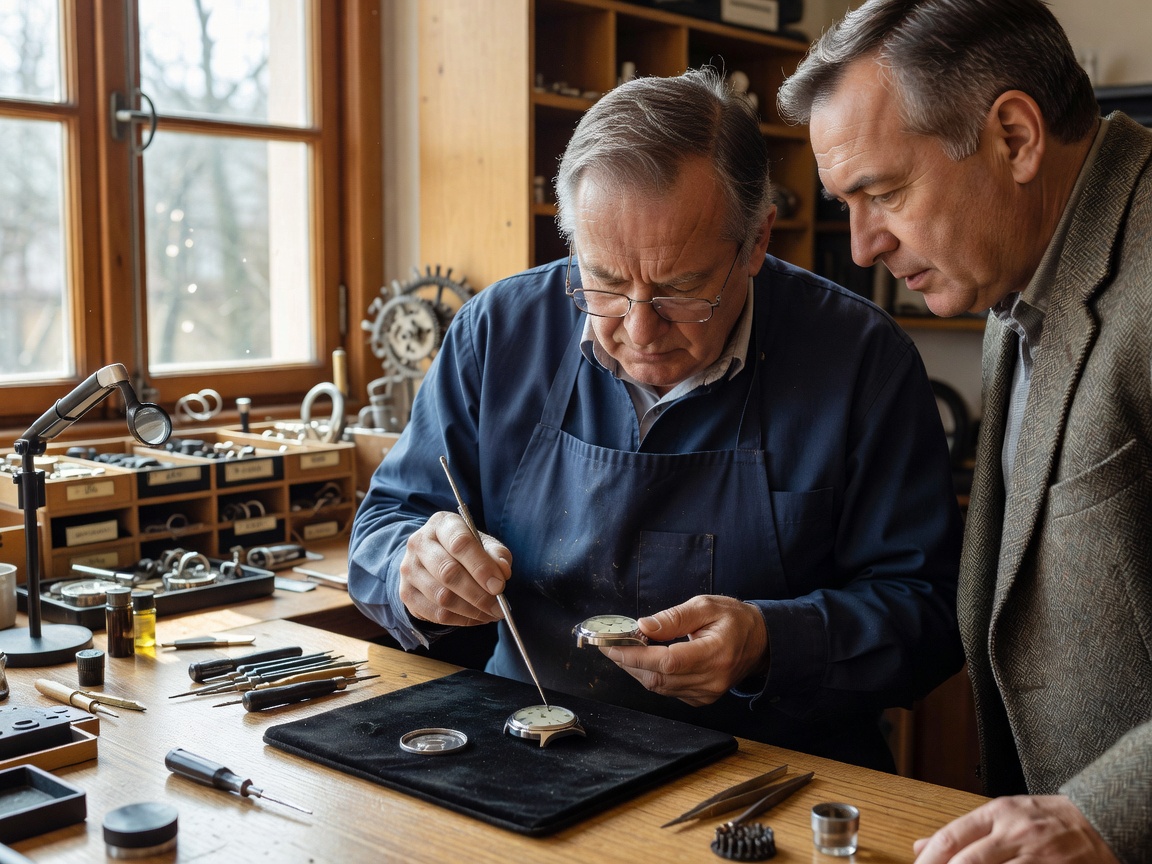
Case finishing changes geometry
Abrasive polishing removes material. It can soften transitions, thin lugs, reduce the clarity of engravings and alter the relationship between polished and brushed areas. Repeated light refinishing may have a substantial cumulative effect. “Only a quick polish” therefore needs as much clarity as a larger restoration proposal.
Specialist refinishing may aim to recover a documented profile, sometimes with additional material and machining. That can be accomplished skilfully, but skill does not make the intervention historically invisible. Ask which areas will be altered, what reference supports the proposed shape, whether material will be added or removed and how the work will be recorded.
Cleaning is not automatically harmless either. Plated cases, filled engravings, porous materials, bonded components and fragile seals can respond differently to liquids and equipment. Do not assume that a method suitable for an unassembled steel component is safe for an entire watch. Household polishing compounds and improvised ultrasonic cleaning can create damage that is difficult to reverse.
Dial work deserves its own decision
A dial is often a layered object: base material, coatings, printing, applied markers and luminous deposits may age at different rates. Removing a stain can also remove lettering or lift an unstable finish. A successful cleaning on one dial says little about the safety of the same treatment on another.
Distinguish gentle removal of loose contamination, stabilisation, retouching, full refinishing and replacement. These interventions have different aims and consequences. A refinished dial may remain attractive and useful, but it should not be documented as untouched. A service replacement may improve legibility while changing typography, luminous colour or other visible details.
Hands and dial belong in the same conversation. Replacing one without the other can alter visual balance; matching them cosmetically can require further intervention. Neither result should be assumed. Ask for photographs and explicit approval before any work that changes their appearance.
Old luminous material requires caution
Some older luminous applications contain radioactive substances, including radium or tritium. Appearance alone cannot reliably identify the material or establish how it should be handled. A faint glow, no glow or a particular dial marking is not a sufficient safety assessment.
Do not scrape, brush, blow on or dismantle suspected luminous material. Disturbance can create contamination risks. Tell the practitioner what is known about the watch and ask whether they have suitable procedures and access to qualified advice. Local rules may affect handling, transport, storage and disposal.
A decision to stabilise, replace or retain such material should consider both physical safety and documentary loss. “Keep all old parts” is not an instruction that overrides hazardous-material requirements. Record the reason if a component cannot be returned.
Write down the chosen compromise
A thoughtful result may retain scratches while replacing a damaged crystal, or preserve a dial while accepting limits on use. It may also include a consciously chosen cosmetic change. What matters is that the decision was informed, specific and recorded rather than bundled into routine servicing.
Conservation resources from the Institute of Conservation and the American Institute for Conservation help explain why minimal intervention, documentation and material knowledge matter. For radiation information, consult the UK Health Security Agency and applicable local authorities rather than relying on collector folklore.
Glossary: patina, refinishing and stabilisation
Patina is a broad description of surface change, not proof of originality or safety. Refinishing intentionally changes a surface's appearance. Stabilisation aims to reduce continuing deterioration, although it may still involve intervention.